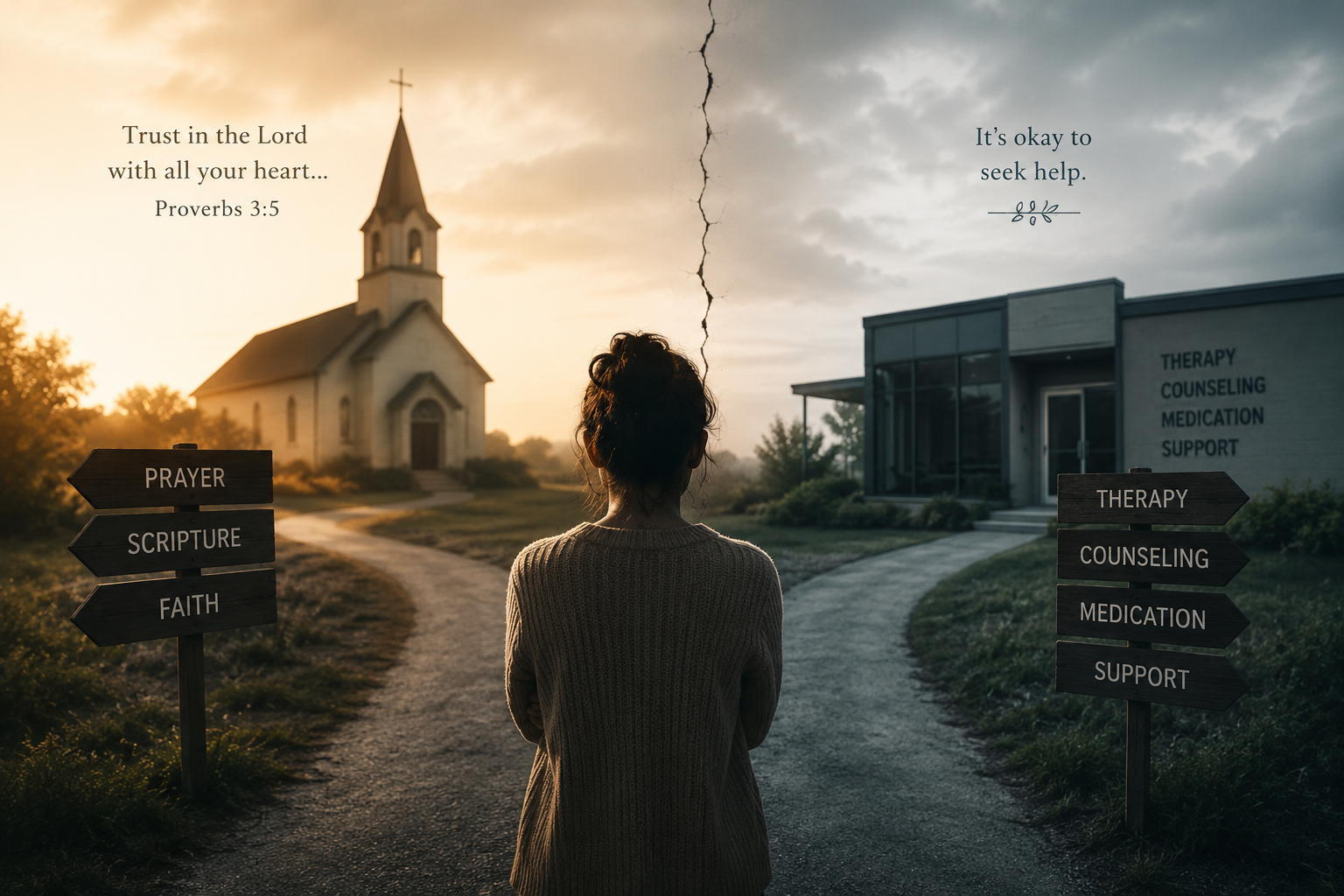
The mental health space is a complex one to navigate for anyone, let alone Christians. Until recently, our culture has often relegated psychiatric care to something shameful—or, at the very least, something simply not discussed. We have created a stigma around mental health treatment that can make seeking care feel taboo.
There are many reasons for this. First, there are no definitive diagnostic tests for conditions like depression, anxiety, or psychosis. I cannot run a blood test to confirm a diagnosis of Bipolar Disorder the same way I could determine whether someone has an infection. I cannot order an MRI and receive a definitive answer like I could for someone suffering from a stroke. These diagnoses come through careful questioning, getting to know the individual, and identifying where someone has lost healthy functioning or control in certain areas of life.
Because of this complexity, mental health treatment carries barriers to effective care. Some of those barriers stem from the way psychiatric practitioners diagnose. Some come from unethical medical management. Others arise from cultural stigma. And not a small part of it can come from the patient themselves.
Add faith into the equation, and things can become even messier.
When a Christian struggles with being unable to get out of bed in the morning, experiences anxiety that cripples daily functioning, begins seeing things that are not there, or starts coping through substances, alcohol, pornography, or other addictions, the response is often:
Pray harder
Trust in God
God is good
God is testing you
Please do not misunderstand me. We should pray. We do need to trust in God. God is good. And yes, God may be using hardship to refine us.
But seeking psychiatric or mental health care does not negate faith in God.
Mental health treatment and medical management can be expressions of common grace. Just as a diabetic patient may need insulin, someone suffering from clinical depression may need additional support and treatment to help restore healthy functioning.
There are many possible reasons someone may struggle with mental health challenges. It could involve diet, lifestyle, sin patterns, environmental toxins, nutrient deficiencies, trauma, or genetics.
That is why I am in this space.
We need faith and medicine working together in a way that removes stigma and reinforces God’s intent and design for our lives. Examining every aspect of our health—physical, emotional, spiritual, and relational—can strengthen both wellness and faith.
If you are a person of faith, you are not alone in your struggles. You are not alone in your doubts, fears, or hurts. And you do not have to walk through them in isolation.
