Anxiety: Regain Control Over Your Life

We all experience anxiety from time to time. Before a big presentation, an important exam, or a difficult conversation, anxiety can actually be helpful. It prepares our minds and bodies to respond to challenges. But when anxiety becomes constant, overwhelming, or begins interfering with everyday life, it may be time to seek help.
Anxiety is more than simply "worrying too much." It can feel like your mind is constantly racing, your body won't relax, or you're always waiting for something to go wrong. Many people experience a pounding heart, muscle tension, stomach discomfort, difficulty sleeping, irritability, or trouble concentrating. Others avoid situations altogether because they fear what might happen.
One of the hardest parts about anxiety is that it convinces us that every "what if" deserves immediate attention. It pulls us away from the present moment and into an endless cycle of trying to predict and prevent worst-case scenarios. While our brain believes it's protecting us, it often leaves us exhausted, overwhelmed, and stuck.
The good news is that anxiety is highly treatable. With the right support, people can learn to quiet the constant mental noise and regain a sense of peace. Therapy can help identify patterns of thinking that fuel anxiety while teaching practical skills to manage it. For some individuals, medication can reduce symptoms enough to make those coping strategies more effective. Often, the best outcomes come from combining both approaches.
Healthy habits can also make a meaningful difference. Regular exercise, quality sleep, limiting caffeine, practicing mindfulness, spending time outdoors, and maintaining supportive relationships all help strengthen our ability to manage stress. While these habits may not eliminate anxiety on their own, they provide a strong foundation for long-term mental wellness.
Many people live with anxiety for years because they assume it's simply part of their personality. They describe themselves as "just a worrier" or believe they have to push through it alone. But anxiety isn't a character flaw or a sign that you're weak. It's a treatable condition, and asking for help is one of the healthiest decisions you can make.
If anxiety has begun affecting your work, your relationships, your sleep, or your ability to enjoy life, you don't have to wait until you're completely overwhelmed. Early treatment often leads to better outcomes and can help prevent symptoms from becoming more severe over time.
At New Page Mental Wellness, we believe that treatment is about more than simply reducing anxiety. It's about helping you regain confidence, find balance, and live with greater freedom. Every person's experience is unique, which is why we create individualized treatment plans that consider your symptoms, your goals, and the life you want to build.
Anxiety may tell you that you're never safe, never prepared, or never enough. You don't have to believe everything anxiety tells you. With the right support, healing is possible—and peace is closer than you may think.
Your next chapter doesn't begin when anxiety disappears. It begins when you decide that anxiety no longer gets to write your story.
Natural Ways to Improve Sleep (That Actually Work)
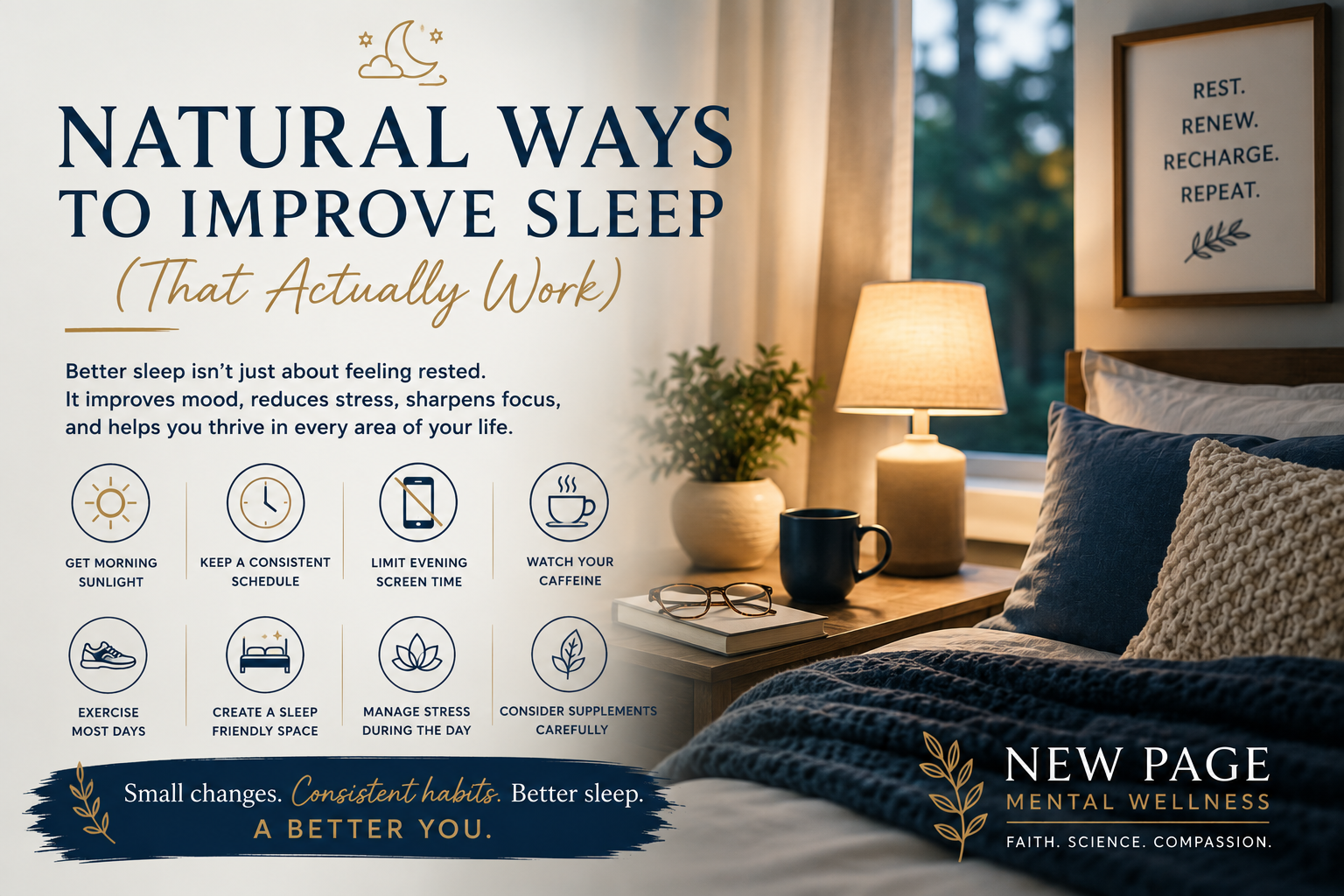
If you've ever laid awake staring at the ceiling, watching the clock inch closer to morning, you're not alone. Millions of people struggle with sleep, and while it's tempting to search for a quick fix, the most effective solutions are often the simplest—and the most consistent.
The good news is that improving your sleep doesn't always require medication. Small, evidence-based changes to your daily habits can significantly improve both the quality and quantity of your sleep over time.
1. Keep a Consistent Sleep Schedule
Your brain thrives on routine. Going to bed and waking up at the same time every day—even on weekends—helps regulate your body's internal clock (circadian rhythm). While sleeping in may feel rewarding after a late night, it can actually make it harder to fall asleep the following evening.
Aim for consistency rather than perfection.
2. Get Morning Sunlight
One of the most powerful (and free) sleep aids is sunlight.
Spending 10–30 minutes outside within the first hour of waking signals your brain that it's daytime, helping regulate your body's production of melatonin later that evening. Even on cloudy days, outdoor light is far brighter than indoor lighting.
A short morning walk may improve both your sleep and your mood.
3. Reduce Evening Screen Time
Phones, tablets, and televisions don't just expose us to blue light—they also keep our minds engaged.
Scrolling social media, checking emails, or watching an exciting show can make it difficult for your brain to transition into sleep mode. Try turning off screens at least 30 to 60 minutes before bed. Instead, consider reading, stretching, journaling, or listening to calming music.
4. Watch Your Caffeine Intake
Caffeine has a half-life of about five to six hours, meaning nearly half of that afternoon coffee may still be in your system at bedtime.
If you're having trouble falling asleep, consider avoiding caffeine after lunch—or even earlier if you're particularly sensitive.
5. Exercise Most Days
Regular physical activity is one of the best natural treatments for insomnia.
Exercise helps reduce stress, improve mood, and increase the amount of restorative deep sleep. Even a 20- to 30-minute walk most days of the week can make a noticeable difference.
Just try to avoid intense workouts within a couple of hours of bedtime if you find they leave you feeling energized.
6. Create a Bedroom That Promotes Sleep
Your bedroom should send one clear message to your brain: This is where I sleep.
Simple changes can make a big difference:
Keep the room cool (around 65–68°F is comfortable for many people).
Make the room as dark as possible with blackout curtains or an eye mask.
Reduce noise with a fan, white noise machine, or earplugs if needed.
Reserve your bed for sleep and intimacy—not work or endless scrolling.
7. Don't Fight Your Mind
One of the biggest mistakes people make is trying to force themselves to fall asleep.
Ironically, the harder we try, the more alert we become.
If you've been awake for about 20–30 minutes, get out of bed and do something relaxing in dim light, such as reading or deep breathing. Return to bed only when you begin to feel sleepy again. This helps your brain associate your bed with sleep rather than frustration.
8. Consider Natural Supplements Carefully
Some supplements may support better sleep when used appropriately.
Melatonin can be helpful for jet lag, shift work, or delayed sleep schedules. Magnesium may help some people relax, particularly if they have a deficiency. L-theanine has also shown promise in promoting relaxation without significant sedation.
However, supplements aren't magic, and "natural" doesn't always mean safe. They can interact with medications or medical conditions, so it's wise to discuss them with your healthcare provider before starting something new.
9. Manage Stress During the Day
Many people blame bedtime for their racing thoughts when the real problem is that they haven't had time to process the day's stress.
Try setting aside 10–15 minutes each evening to write down worries, make tomorrow's to-do list, or practice mindfulness. Giving your brain permission to "put things down" before bed often makes it easier to fall asleep.
10. Know When It's Time to Seek Help
If you've been struggling with poor sleep for several weeks, or you're experiencing loud snoring, gasping during sleep, restless legs, frequent nightmares, or excessive daytime fatigue, it may be time for a professional evaluation.
Sleep disorders such as insomnia and sleep apnea are common—and highly treatable. Addressing the underlying cause often leads to significant improvements in both physical and mental health.
The Bottom Line
There isn't one secret to better sleep. Instead, it's the combination of healthy habits practiced consistently that creates lasting change.
At New Page Mental Wellness, we believe that quality sleep is one of the cornerstones of emotional well-being. Better sleep can improve mood, reduce anxiety, sharpen focus, and increase resilience to everyday stress. While medications have an important role for some people, they're often most effective when paired with healthy sleep habits and treatment that addresses the root cause of the problem.
You don't have to accept poor sleep as your normal. Small changes made today can lead to more restful nights—and brighter mornings.
Your next chapter doesn't begin when you're less busy. Sometimes, it begins with a good night's sleep.
Depression: More Than Just Feeling Sad

We've all had days when we feel down. Maybe work has been overwhelming, relationships have been difficult, or life simply hasn't gone as planned. Usually those feelings improve with time. Depression is different.
Depression is a medical condition that affects the way we think, feel, and experience the world around us. It can rob us of motivation, make everyday tasks feel exhausting, and convince us that things will never get better. For many people, depression doesn't just look like sadness—it may appear as irritability, numbness, difficulty concentrating, changes in sleep or appetite, loss of interest in activities, or even unexplained physical aches and pains.
One of the most frustrating aspects of depression is that it often lies to us. It tells us we're a burden, that we're failing, or that nothing we do will make a difference. Those thoughts can feel incredibly convincing, but they are symptoms of the illness—not statements of truth.
The encouraging news is that depression is highly treatable. Recovery doesn't always happen overnight, but most people improve with the right combination of treatment and support. For some, therapy provides the tools needed to challenge negative thought patterns and develop healthier coping strategies. Others benefit from medication that helps restore balance to brain chemistry. Many people find the greatest improvement through a combination of both.
Lifestyle habits also play an important role. Consistent sleep, regular physical activity, nutritious food, meaningful relationships, and spending time outdoors can all support recovery. These aren't replacements for professional treatment when depression is significant, but they can be valuable pieces of the healing process.
One of the biggest barriers to getting help is the belief that we should simply "push through it." We often extend compassion to friends and family when they're struggling, yet hold ourselves to a completely different standard. Depression isn't a sign of weakness, laziness, or lack of character. It's a health condition that deserves the same care and attention as diabetes, asthma, or high blood pressure.
If you've been struggling for more than a couple of weeks, or your symptoms are beginning to affect your work, relationships, or daily life, don't wait until things become unbearable. Reaching out for help is not giving up—it's taking the first step toward getting your life back.
At New Page Mental Wellness, we believe that healing is about more than simply reducing symptoms. Our goal is to help you rediscover hope, regain purpose, and build a life that feels meaningful again. Every person's story is different, and treatment should reflect that. Together, we can create a plan that addresses not only your symptoms but your goals, values, and overall well-being.
Your next chapter doesn't begin when life becomes perfect. It begins the moment you decide that you don't have to face depression alone.
What is Integrative Psychiatry?
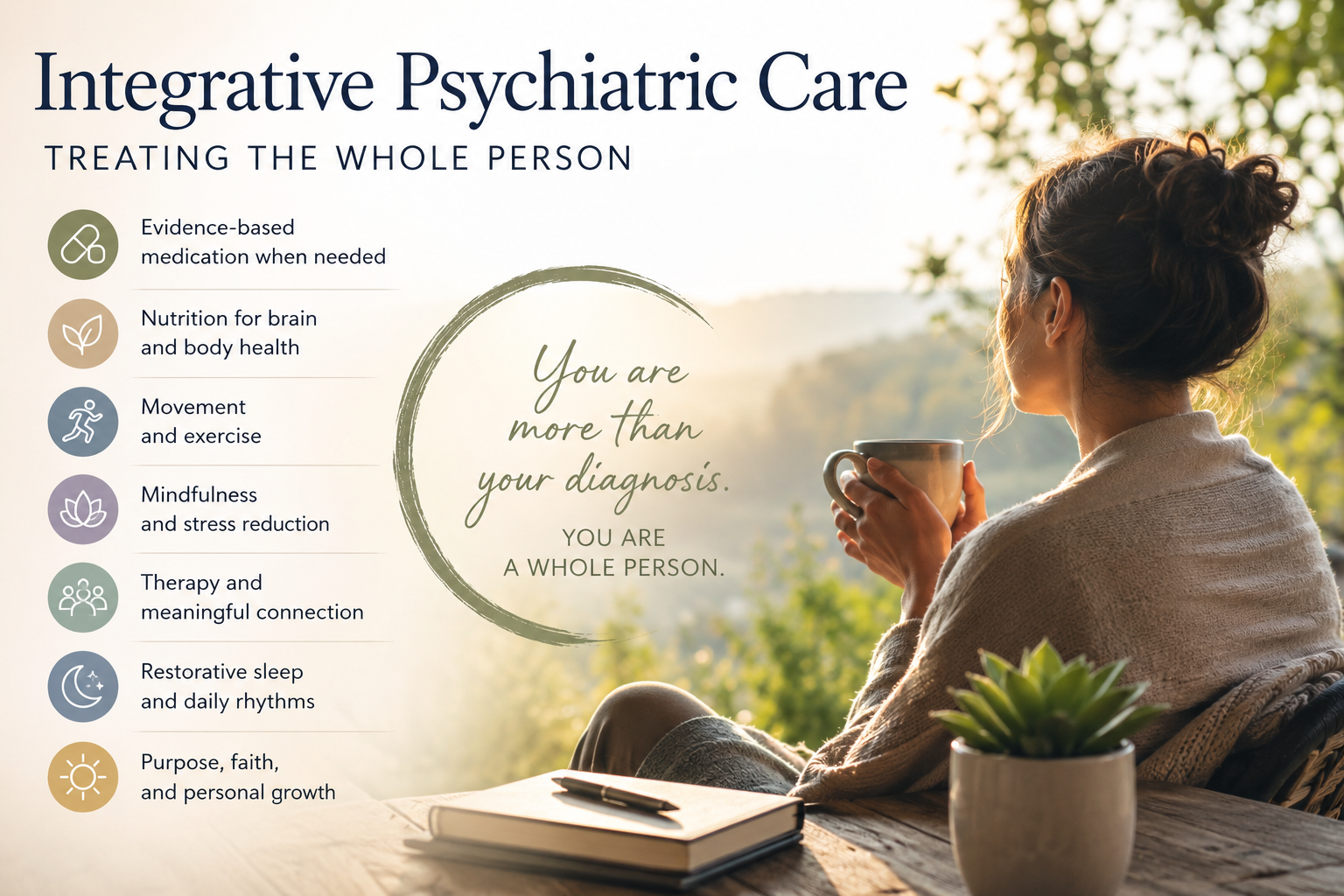
This is a great question, but perhaps the fuller question is: What is integrative psychiatric care, and why does it matter?
In today's healthcare system, many patients find themselves moving from appointment to appointment, often focused on managing symptoms rather than pursuing true wellness. While symptom relief is important, many people are looking for something more—a deeper understanding of why they are struggling and what can be done to improve their overall well-being.
This is where integrative psychiatric care comes in.
My goal is to help identify the root causes that may be contributing to mental health concerns by looking at the whole person. Mental health is influenced by far more than brain chemistry alone. Physical health, nutrition, sleep, relationships, stress, spirituality, movement, environment, and lifestyle all play a role in how we think, feel, and function.
Integrative psychiatry encompasses much more than medication management. The goal is not simply to reduce symptoms, but to help people move toward lasting wellness and greater control over their lives.
Conventional Western medicine and psychiatric medications remain important tools in this process—and that is a good thing. For many people, medication can be life-changing. It can provide stability during difficult seasons, restore functioning, and create the space needed for deeper healing. In some cases, medication may be needed only temporarily. In others, long-term treatment may be the best option. Both approaches are valid.
The beauty of integrative psychiatric care is that treatment extends beyond, “Here’s your antidepressant—see you next month.” Each treatment plan is individualized and may incorporate lifestyle changes, nutrition, exercise, mindfulness practices, targeted supplementation, psychotherapy, and other evidence-informed approaches. These interventions can be powerful tools for supporting mental health and improving overall quality of life.
Sunlight. Physical activity. Prayer. Reduced screen time. Attention to environmental exposures. Meaningful relationships. Many of these practices reflect habits that were once woven naturally into daily life but have become increasingly difficult to maintain in our modern, highly digitized world.
Integrative psychiatric care seeks to bridge that gap—combining the best of modern medicine with practical, whole-person approaches to wellness.
Because you are not a diagnosis. You are a person. An individual. And the care you receive should reflect that.
The Calling I Never Expected

Honestly, becoming a Psychiatric Mental Health provider was never part of my five-year plan. By background and training, I was an ICU nurse. I trained on nearly every medical device imaginable—from dialysis machines to balloon pumps to ventricular assist devices. I trained other nurses on managing fresh open-heart patients.
Then COVID happened.
People have mixed reactions when COVID is brought up. Some say it was fake. Others believe it was engineered. Still others view it simply as a pandemic. I’m not here to weigh in on those opinions. I was in the trenches, caring for five to six ICU patients at a time when the normal ratio was one to two. We managed symptoms, cared for patients and their families, and isolated from our own loved ones because we were so unsure of what we were dealing with.
And the cracks began to form.
It was like pressure bearing down on a slab of concrete. At first, everything held together. We managed. But as the pressure continued, cracks began to form in people’s lives, their health, and the way they thought and functioned. During that time, I realized those cracks had been there all along—it was simply the added pressure that made them visible.
For a long time, people have struggled with depression, anxiety, PTSD, and countless other conditions, yet we often hid those struggles or treated them as shameful. It made me realize how far we had come in treating physical illness while simultaneously neglecting mental health.
Through a series of experiences and interventions, God showed me that I needed to walk a different path than the one I had planned. A path that involved bringing wellness, healing, and support to fractured minds and hearts. I realized I was being called into a space I had never previously considered.
Now, with compassion and curiosity, I strive to bring holistic care into the mental health space.
Faith, Mental Health, and the Space in Between
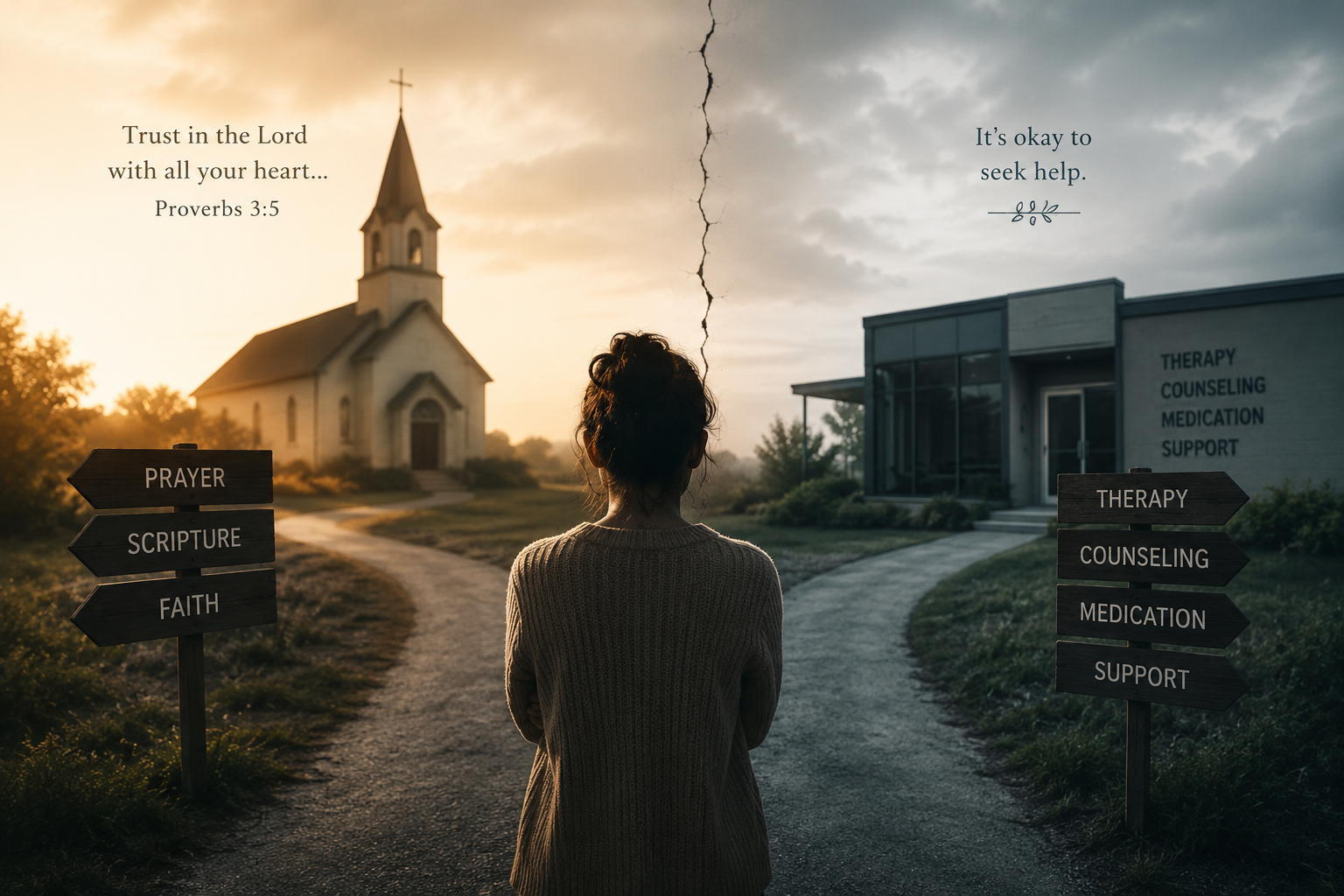
The mental health space is a complex one to navigate for anyone, let alone Christians. Until recently, our culture has often relegated psychiatric care to something shameful—or, at the very least, something simply not discussed. We have created a stigma around mental health treatment that can make seeking care feel taboo.
There are many reasons for this. First, there are no definitive diagnostic tests for conditions like depression, anxiety, or psychosis. I cannot run a blood test to confirm a diagnosis of Bipolar Disorder the same way I could determine whether someone has an infection. I cannot order an MRI and receive a definitive answer like I could for someone suffering from a stroke. These diagnoses come through careful questioning, getting to know the individual, and identifying where someone has lost healthy functioning or control in certain areas of life.
Because of this complexity, mental health treatment carries barriers to effective care. Some of those barriers stem from the way psychiatric practitioners diagnose. Some come from unethical medical management. Others arise from cultural stigma. And not a small part of it can come from the patient themselves.
Add faith into the equation, and things can become even messier.
When a Christian struggles with being unable to get out of bed in the morning, experiences anxiety that cripples daily functioning, begins seeing things that are not there, or starts coping through substances, alcohol, pornography, or other addictions, the response is often:
Pray harder
Trust in God
God is good
God is testing you
Please do not misunderstand me. We should pray. We do need to trust in God. God is good. And yes, God may be using hardship to refine us.
But seeking psychiatric or mental health care does not negate faith in God.
Mental health treatment and medical management can be expressions of common grace. Just as a diabetic patient may need insulin, someone suffering from clinical depression may need additional support and treatment to help restore healthy functioning.
There are many possible reasons someone may struggle with mental health challenges. It could involve diet, lifestyle, sin patterns, environmental toxins, nutrient deficiencies, trauma, or genetics.
That is why I am in this space.
We need faith and medicine working together in a way that removes stigma and reinforces God’s intent and design for our lives. Examining every aspect of our health—physical, emotional, spiritual, and relational—can strengthen both wellness and faith.
If you are a person of faith, you are not alone in your struggles. You are not alone in your doubts, fears, or hurts. And you do not have to walk through them in isolation.