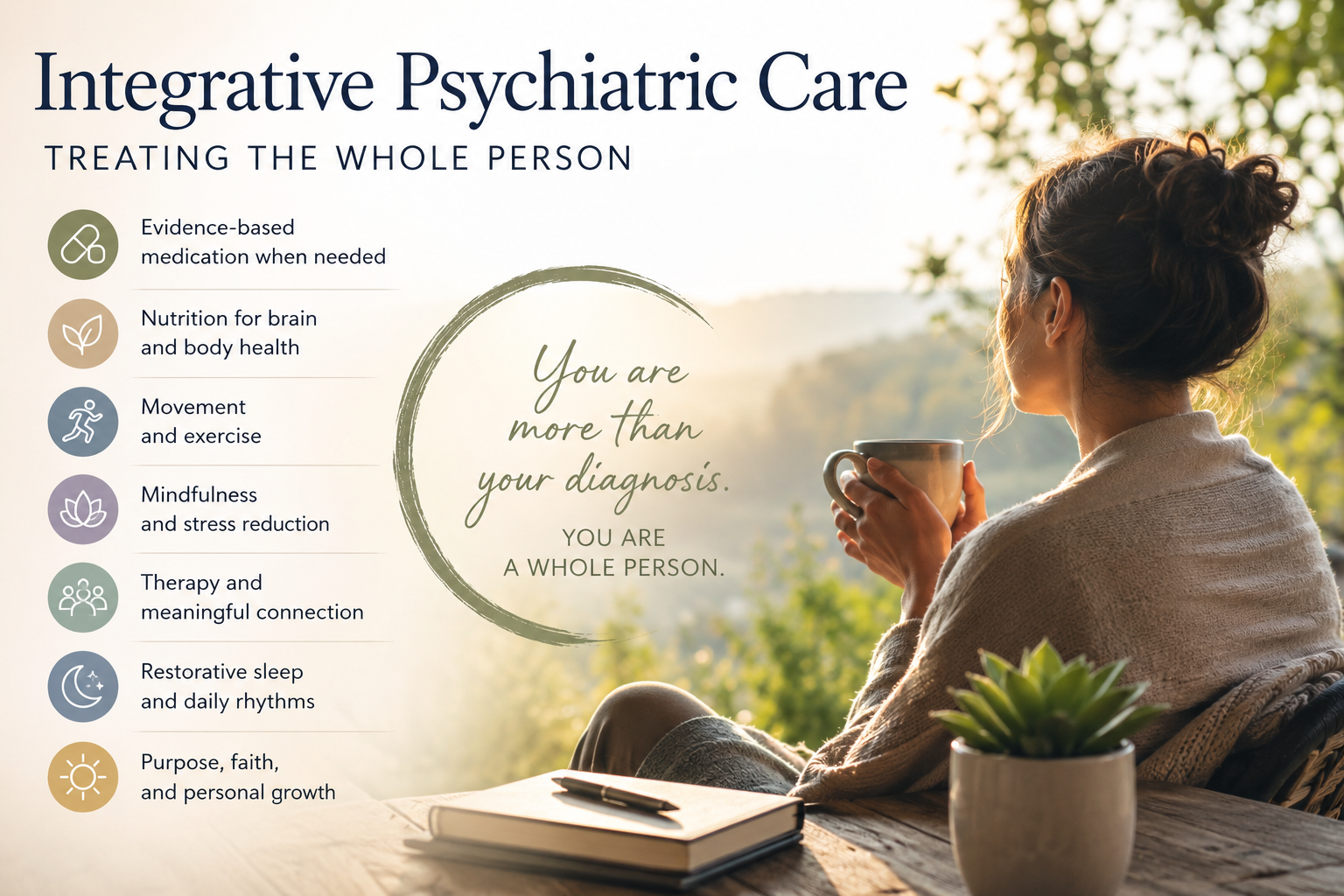
This is a great question, but perhaps the fuller question is: What is integrative psychiatric care, and why does it matter?
In today's healthcare system, many patients find themselves moving from appointment to appointment, often focused on managing symptoms rather than pursuing true wellness. While symptom relief is important, many people are looking for something more—a deeper understanding of why they are struggling and what can be done to improve their overall well-being.
This is where integrative psychiatric care comes in.
My goal is to help identify the root causes that may be contributing to mental health concerns by looking at the whole person. Mental health is influenced by far more than brain chemistry alone. Physical health, nutrition, sleep, relationships, stress, spirituality, movement, environment, and lifestyle all play a role in how we think, feel, and function.
Integrative psychiatry encompasses much more than medication management. The goal is not simply to reduce symptoms, but to help people move toward lasting wellness and greater control over their lives.
Conventional Western medicine and psychiatric medications remain important tools in this process—and that is a good thing. For many people, medication can be life-changing. It can provide stability during difficult seasons, restore functioning, and create the space needed for deeper healing. In some cases, medication may be needed only temporarily. In others, long-term treatment may be the best option. Both approaches are valid.
The beauty of integrative psychiatric care is that treatment extends beyond, “Here’s your antidepressant—see you next month.” Each treatment plan is individualized and may incorporate lifestyle changes, nutrition, exercise, mindfulness practices, targeted supplementation, psychotherapy, and other evidence-informed approaches. These interventions can be powerful tools for supporting mental health and improving overall quality of life.
Sunlight. Physical activity. Prayer. Reduced screen time. Attention to environmental exposures. Meaningful relationships. Many of these practices reflect habits that were once woven naturally into daily life but have become increasingly difficult to maintain in our modern, highly digitized world.
Integrative psychiatric care seeks to bridge that gap—combining the best of modern medicine with practical, whole-person approaches to wellness.
Because you are not a diagnosis. You are a person. An individual. And the care you receive should reflect that.
