If you've ever laid awake staring at the ceiling, watching the clock inch closer to morning, you're not alone. Millions of people struggle with sleep, and while it's tempting to search for a quick fix, the most effective solutions are often the simplest—and the most consistent.
The good news is that improving your sleep doesn't always require medication. Small, evidence-based changes to your daily habits can significantly improve both the quality and quantity of your sleep over time.
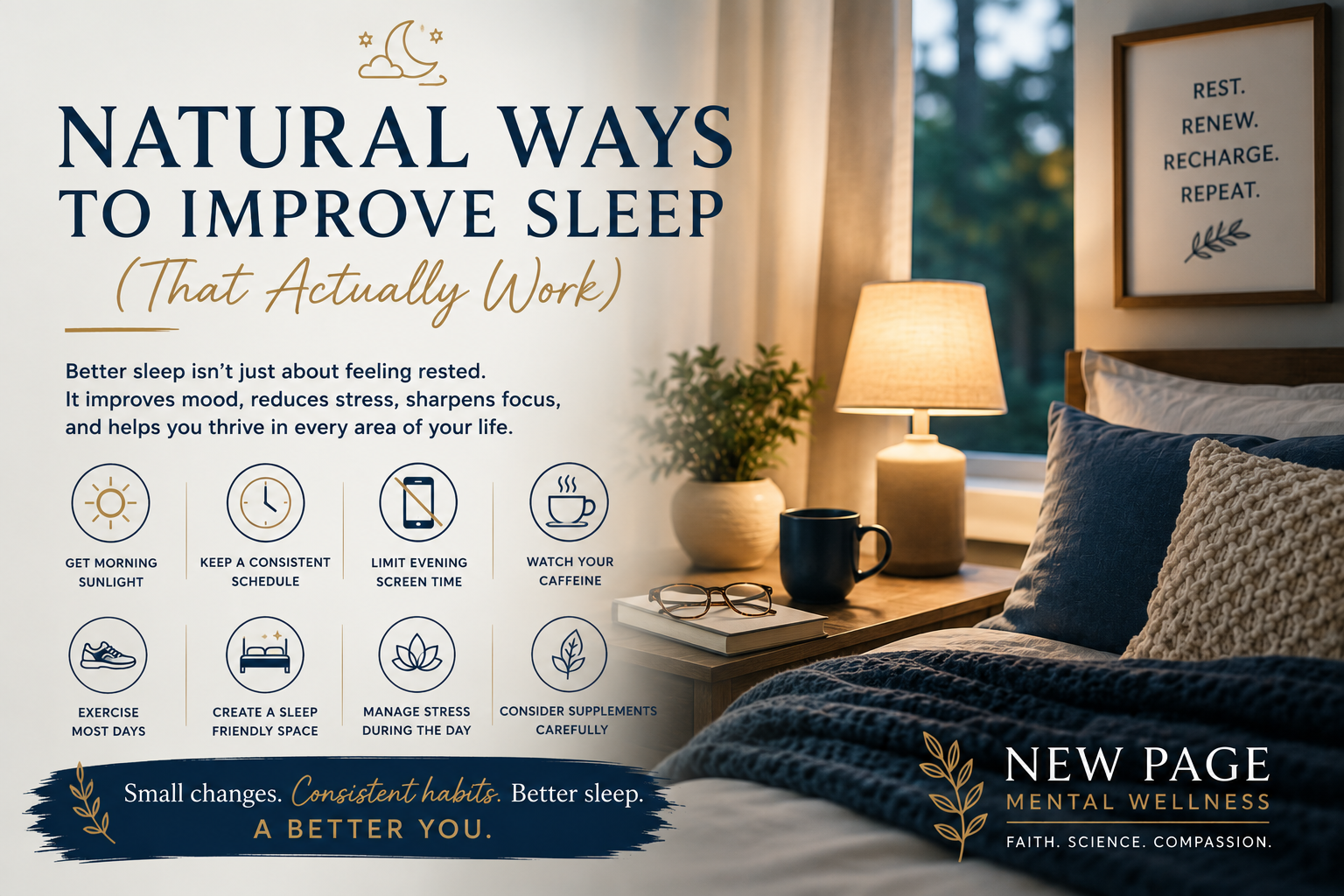
1. Keep a Consistent Sleep Schedule
Your brain thrives on routine. Going to bed and waking up at the same time every day—even on weekends—helps regulate your body's internal clock (circadian rhythm). While sleeping in may feel rewarding after a late night, it can actually make it harder to fall asleep the following evening.
Aim for consistency rather than perfection.
2. Get Morning Sunlight
One of the most powerful (and free) sleep aids is sunlight.
Spending 10–30 minutes outside within the first hour of waking signals your brain that it's daytime, helping regulate your body's production of melatonin later that evening. Even on cloudy days, outdoor light is far brighter than indoor lighting.
A short morning walk may improve both your sleep and your mood.
3. Reduce Evening Screen Time
Phones, tablets, and televisions don't just expose us to blue light—they also keep our minds engaged.
Scrolling social media, checking emails, or watching an exciting show can make it difficult for your brain to transition into sleep mode. Try turning off screens at least 30 to 60 minutes before bed. Instead, consider reading, stretching, journaling, or listening to calming music.
4. Watch Your Caffeine Intake
Caffeine has a half-life of about five to six hours, meaning nearly half of that afternoon coffee may still be in your system at bedtime.
If you're having trouble falling asleep, consider avoiding caffeine after lunch—or even earlier if you're particularly sensitive.
5. Exercise Most Days
Regular physical activity is one of the best natural treatments for insomnia.
Exercise helps reduce stress, improve mood, and increase the amount of restorative deep sleep. Even a 20- to 30-minute walk most days of the week can make a noticeable difference.
Just try to avoid intense workouts within a couple of hours of bedtime if you find they leave you feeling energized.
6. Create a Bedroom That Promotes Sleep
Your bedroom should send one clear message to your brain: This is where I sleep.
Simple changes can make a big difference:
Keep the room cool (around 65–68°F is comfortable for many people).
Make the room as dark as possible with blackout curtains or an eye mask.
Reduce noise with a fan, white noise machine, or earplugs if needed.
Reserve your bed for sleep and intimacy—not work or endless scrolling.
7. Don't Fight Your Mind
One of the biggest mistakes people make is trying to force themselves to fall asleep.
Ironically, the harder we try, the more alert we become.
If you've been awake for about 20–30 minutes, get out of bed and do something relaxing in dim light, such as reading or deep breathing. Return to bed only when you begin to feel sleepy again. This helps your brain associate your bed with sleep rather than frustration.
8. Consider Natural Supplements Carefully
Some supplements may support better sleep when used appropriately.
Melatonin can be helpful for jet lag, shift work, or delayed sleep schedules. Magnesium may help some people relax, particularly if they have a deficiency. L-theanine has also shown promise in promoting relaxation without significant sedation.
However, supplements aren't magic, and "natural" doesn't always mean safe. They can interact with medications or medical conditions, so it's wise to discuss them with your healthcare provider before starting something new.
9. Manage Stress During the Day
Many people blame bedtime for their racing thoughts when the real problem is that they haven't had time to process the day's stress.
Try setting aside 10–15 minutes each evening to write down worries, make tomorrow's to-do list, or practice mindfulness. Giving your brain permission to "put things down" before bed often makes it easier to fall asleep.
10. Know When It's Time to Seek Help
If you've been struggling with poor sleep for several weeks, or you're experiencing loud snoring, gasping during sleep, restless legs, frequent nightmares, or excessive daytime fatigue, it may be time for a professional evaluation.
Sleep disorders such as insomnia and sleep apnea are common—and highly treatable. Addressing the underlying cause often leads to significant improvements in both physical and mental health.
The Bottom Line
There isn't one secret to better sleep. Instead, it's the combination of healthy habits practiced consistently that creates lasting change.
At New Page Mental Wellness, we believe that quality sleep is one of the cornerstones of emotional well-being. Better sleep can improve mood, reduce anxiety, sharpen focus, and increase resilience to everyday stress. While medications have an important role for some people, they're often most effective when paired with healthy sleep habits and treatment that addresses the root cause of the problem.
You don't have to accept poor sleep as your normal. Small changes made today can lead to more restful nights—and brighter mornings.
Your next chapter doesn't begin when you're less busy. Sometimes, it begins with a good night's sleep.
